The scene
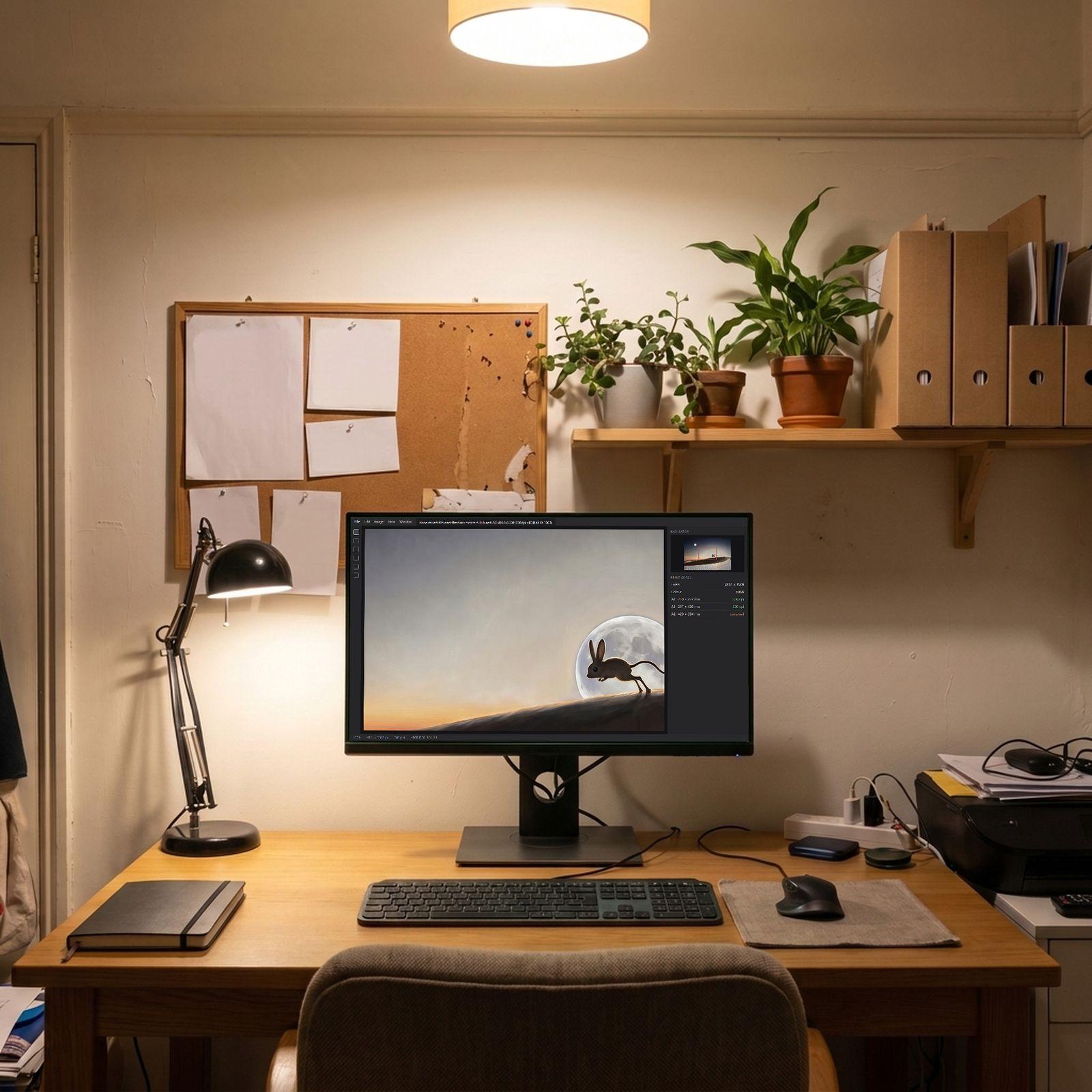
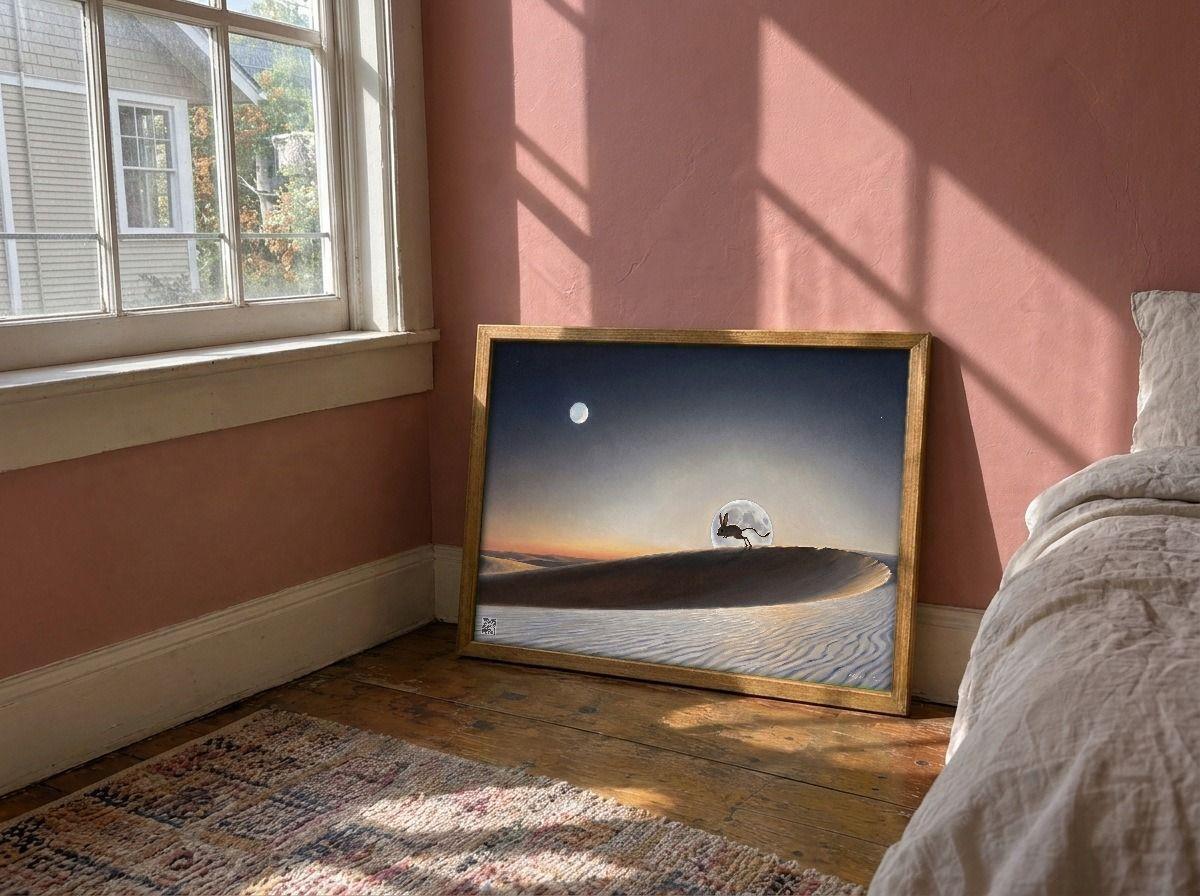
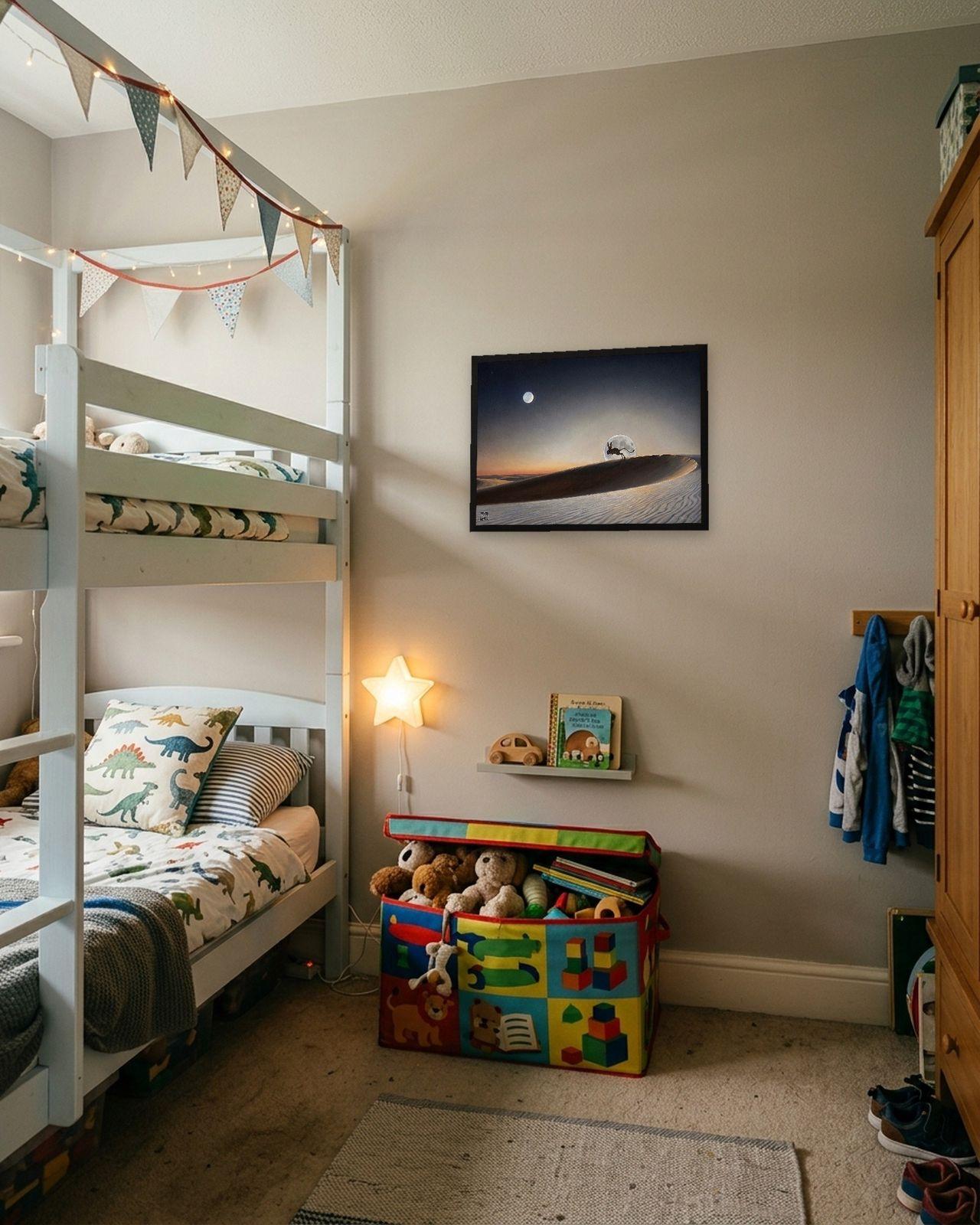
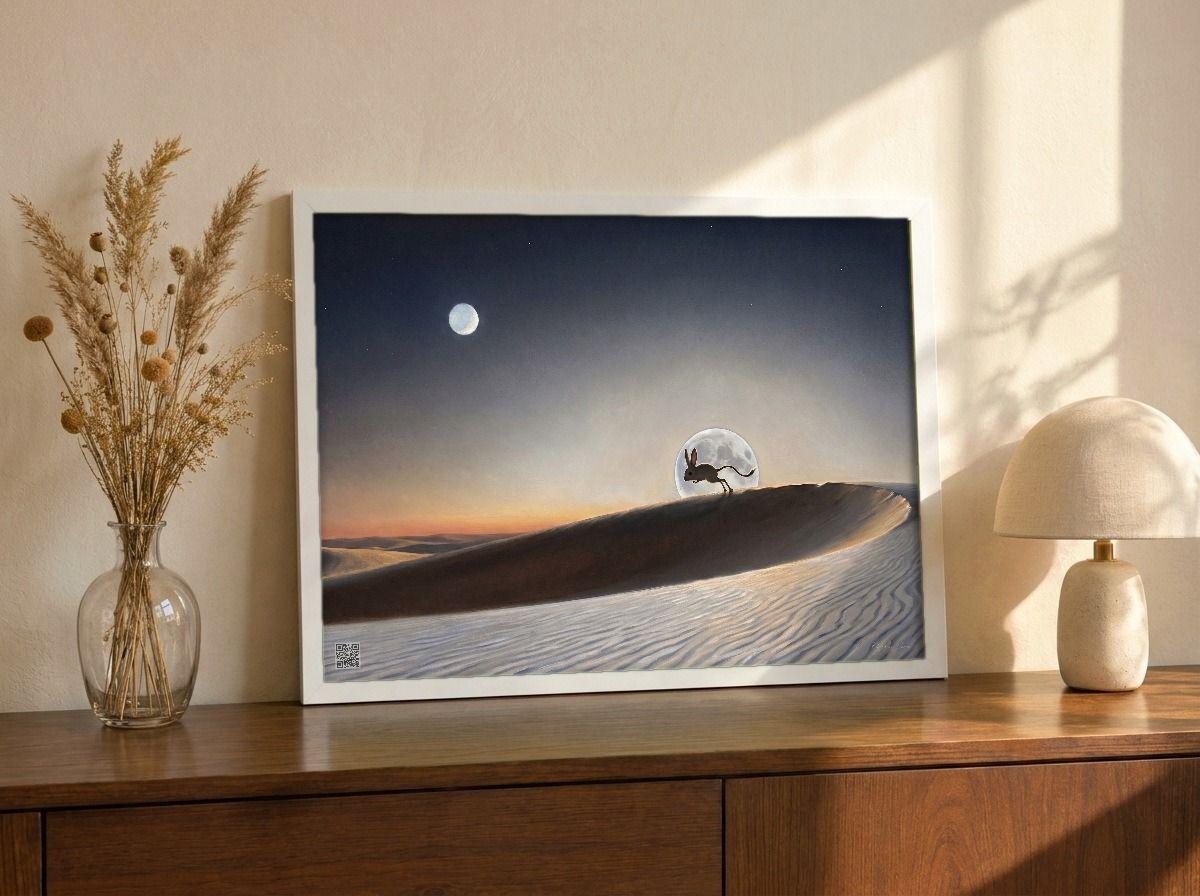
From Dune by Frank Herbert (1965). A tiny desert mouse leaps from the crest of a dune, a dark silhouette against the larger of Arrakis's two moons, while the smaller second moon hangs high in the sky at the left. The last warm band of afterglow lies along the horizon, and the rippled sand below is pale as frost. There are no figures, only the mouse and the light. In the book the Fremen call this hopping mouse the muad'dib, and it becomes the name they give Paul Atreides. The book shows the mice hopping across moonlit sand, and both moons rising over the same basin on the same night, but never together in one view, so I put them together. It never says what the mouse's ears or tail look like, so I gave it the long ears and long tail of a desert jerboa, the real hopping mouse of the deserts of Africa and Asia.
The style
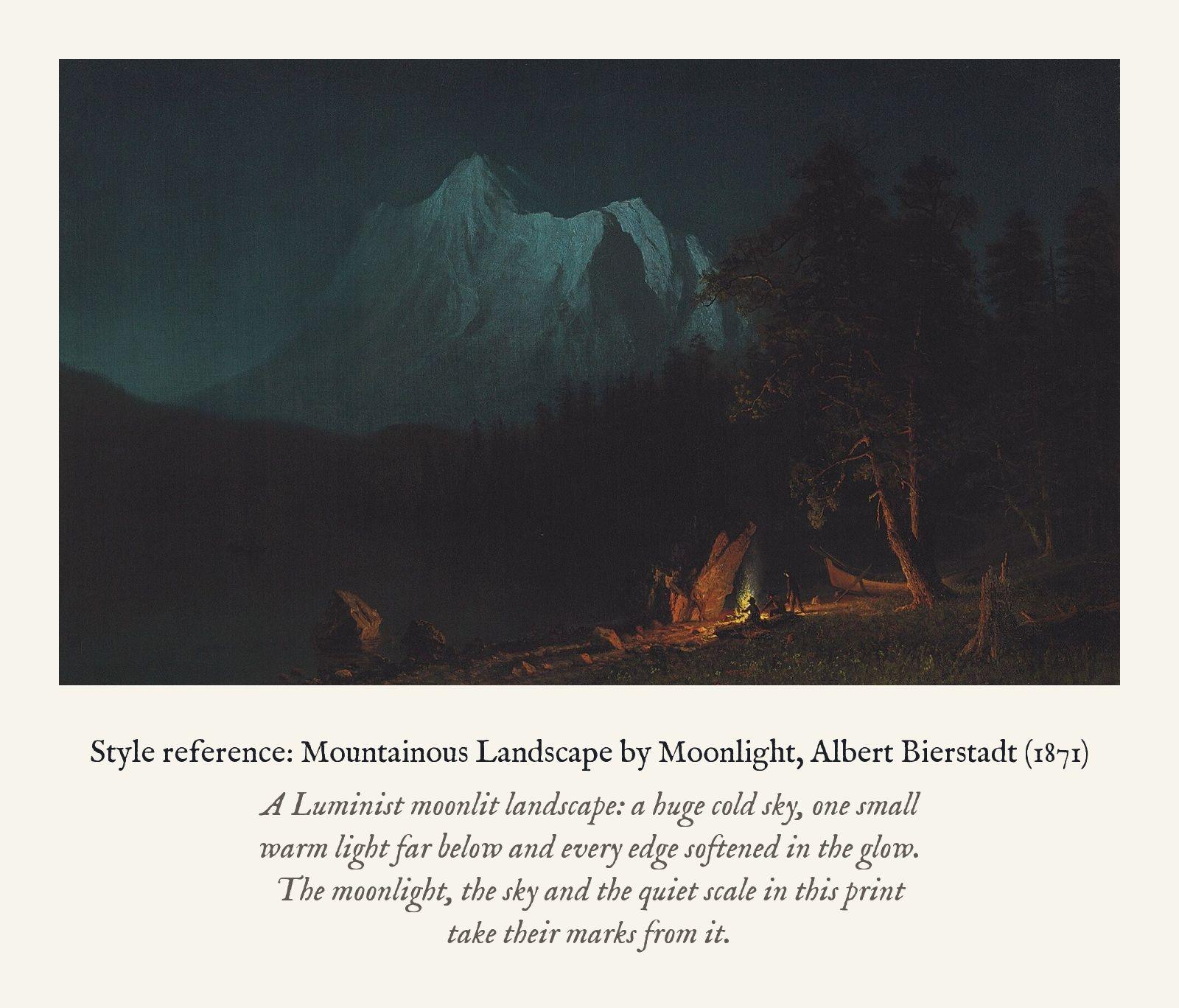
An oil painting in the Luminist manner, where the glowing sky is the subject and everything under it is small and quiet. I kept the sky a vast silver and deep blue, lit by the two moons, with one warm band of afterglow at the horizon and gold only along the sand ridges, so the light does the work.
The inspiration
The look comes from the landscape paintings of Albert Bierstadt (1830 to 1902), the German-born American painter whose wide valleys sit under enormous glowing skies, and from the Luminist painters of his generation, who made light the real subject. The mouse, the dune and the two moons are my own.
How it's made
I design each scene and refine it until it feels right. It's a print of a digital artwork made in the style of an oil painting, not a hand-painted original. The picture runs right to the edge, with no border or caption.