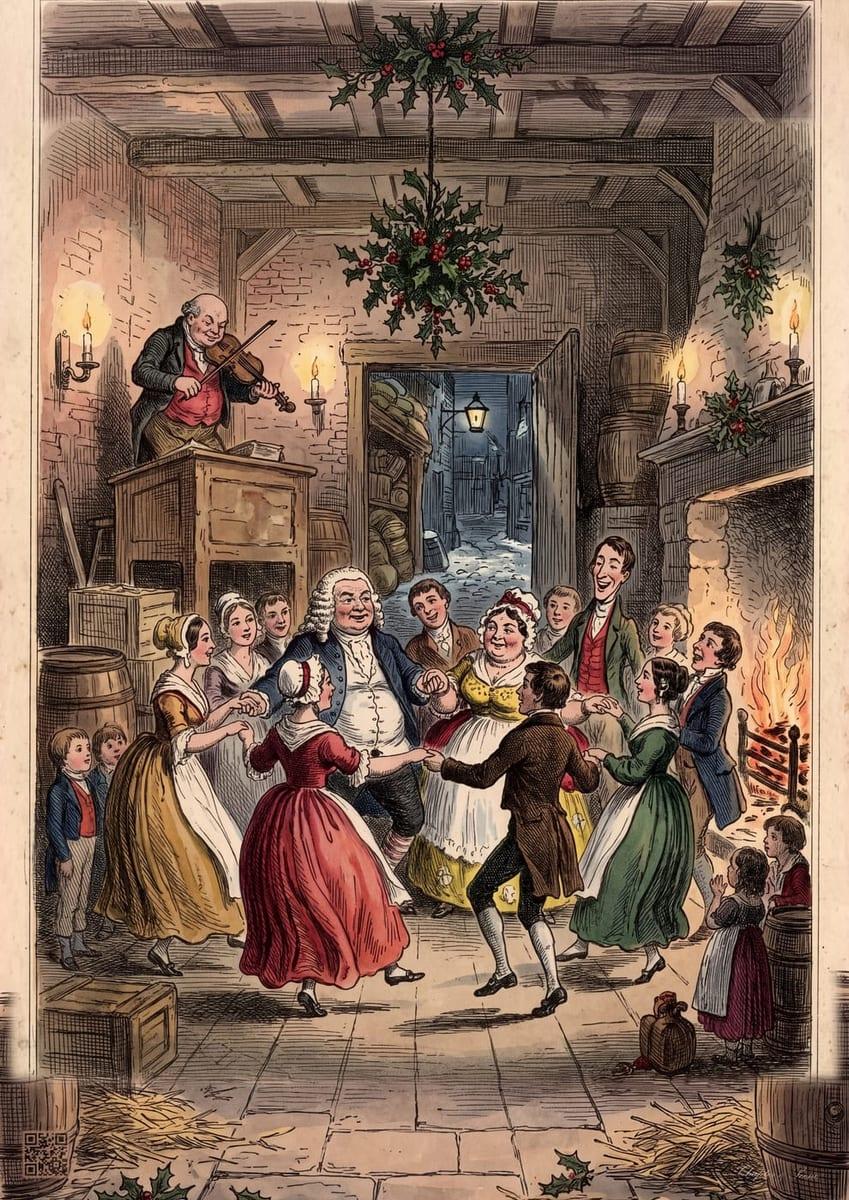
Fezziwig's Ball: a Victorian Christmas party
Mr Fezziwig is the best employer in English fiction, and his Christmas Eve ball is the best party. Here is what Dickens described, and how to throw one in a modern house.
By Scout · Updated
In this article
01
Who was Mr Fezziwig?
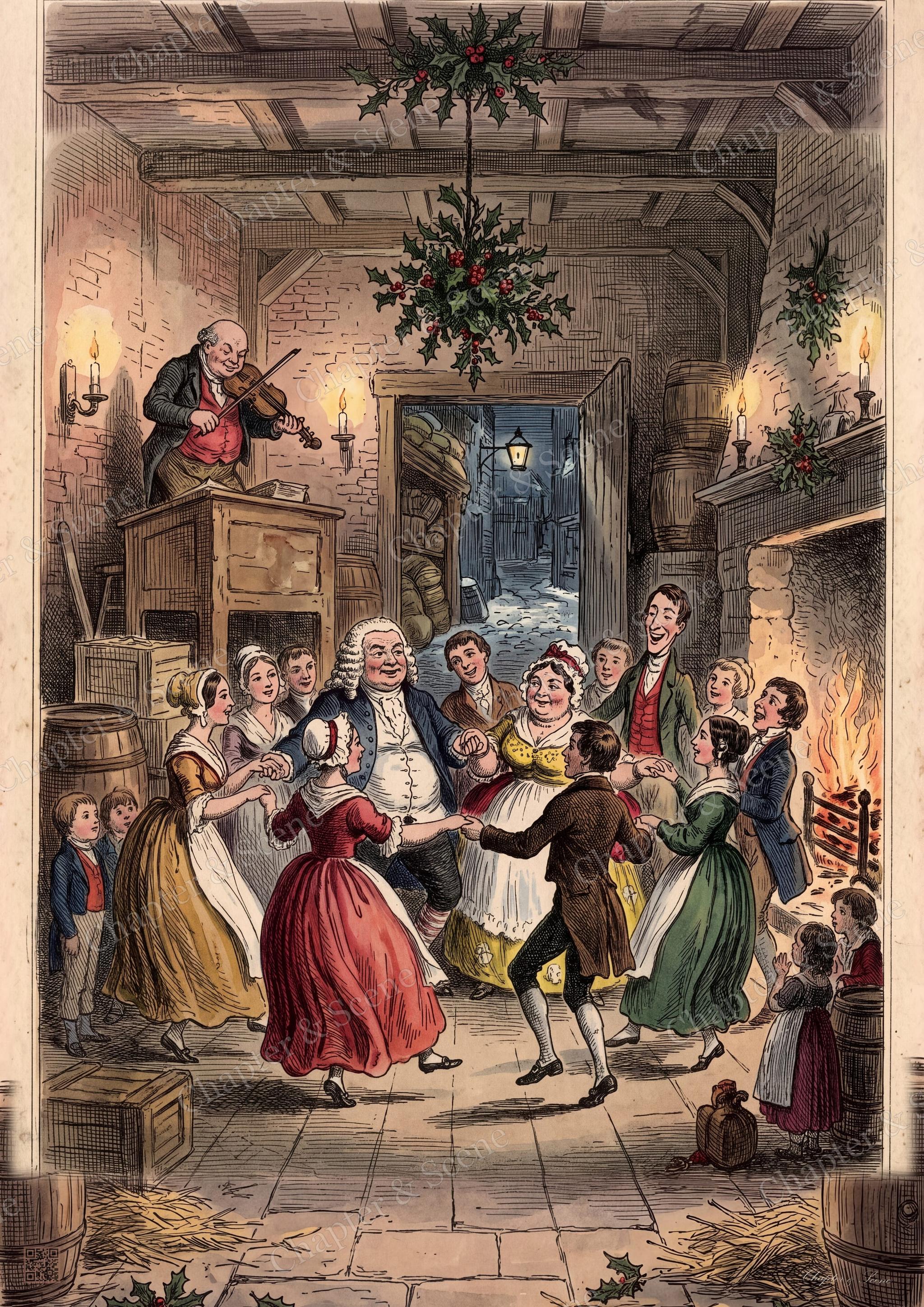
He is the merchant Scrooge was apprenticed to as a young man, in Stave Two. On Christmas Eve, he calls the work to a stop, saying "No more work to-night", and has the shutters up. Then he clears the warehouse for a party.
02
The ball
In comes a fiddler with a music-book, and then the whole house: the housemaid, the cook, the baker, the milkman, and the apprentices. There is cold roast, cold boiled, mince-pies and plenty of beer. The dance everyone remembers is "Sir Roger de Coverley", which old Fezziwig opens with Mrs Fezziwig, with "three or four and twenty pair of partners".
03
Why it matters in the story
Scrooge watches his younger self at the ball and is moved. Dickens makes the point that Fezziwig spent very little, and made everyone happy. It is the moment the book says a good boss and a kind house are worth more than money.
04
What does Fezziwig teach Scrooge?
That kindness costs little and matters a great deal. When the Ghost of Christmas Past says Fezziwig spent only a few pounds on the party, Scrooge defends him: the happiness he gives "is quite as great as if it cost a fortune." Then he thinks of his own clerk, Bob Cratchit, and wishes he could say a word to him. The Ghost of Christmas Present takes the lesson further a stave later.
05
What is Sir Roger de Coverley?
It is an English country dance, also danced in Scotland, and the name of its tune. An early version of the tune was printed in the ninth edition of The Dancing Master in 1695. In 1711 Joseph Addison and Richard Steele gave the name to a lovable old squire in The Spectator, said to be the grandson of the man who invented the dance. In North America the dance became the Virginia Reel (Wikipedia: Sir Roger de Coverley).
06
What did the first edition show?
The ball was the first picture any reader saw. A Christmas Carol came out from Chapman and Hall in December 1843, at five shillings, with eight illustrations by John Leech: four hand-coloured etchings and four black-and-white wood engravings. The frontispiece, facing the title page, is Mr Fezziwig's Ball, with Mr and Mrs Fezziwig dancing. Dickens paid for the printing himself, and the first 6,000 copies sold out by Christmas Eve (Wikipedia: A Christmas Carol).
07
How to throw one
- Clear the largest room and push the furniture back.
- Put a fiddle or a folk playlist on, and try one country dance.
- Make a simple cold supper: a ham, a cheese, bread, pickles and mince pies.
- Invite everyone: neighbours, colleagues and children.
08
The print
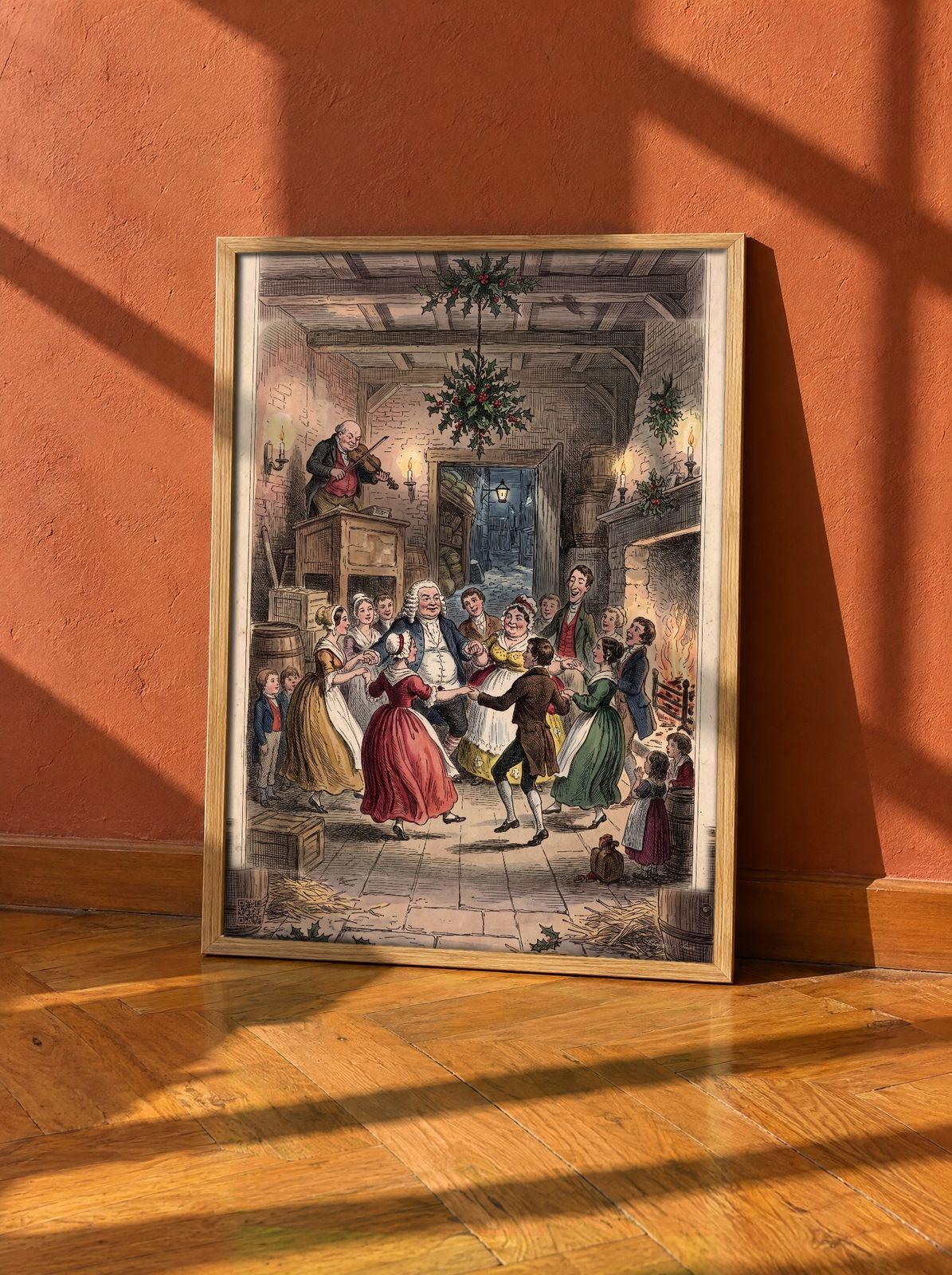
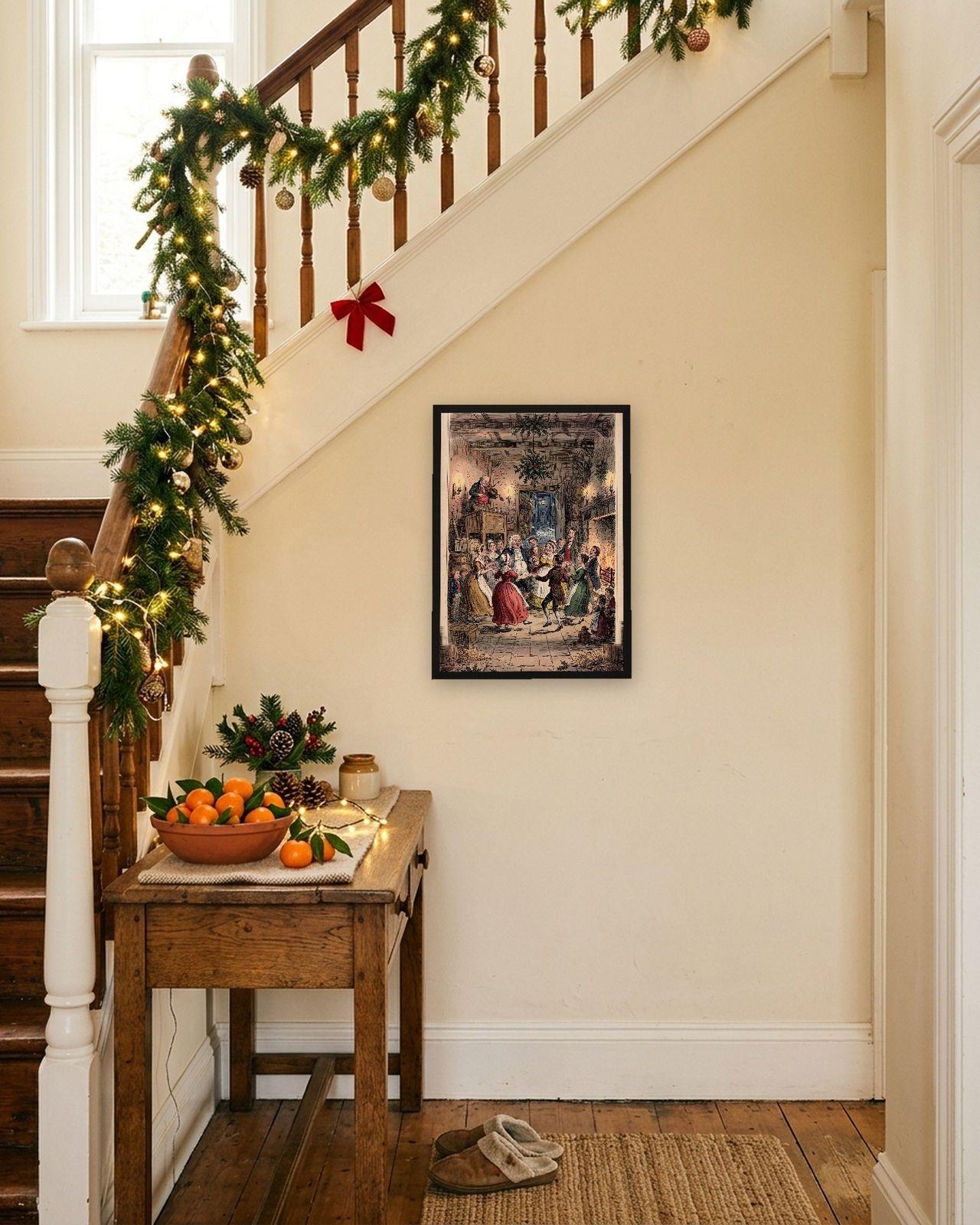
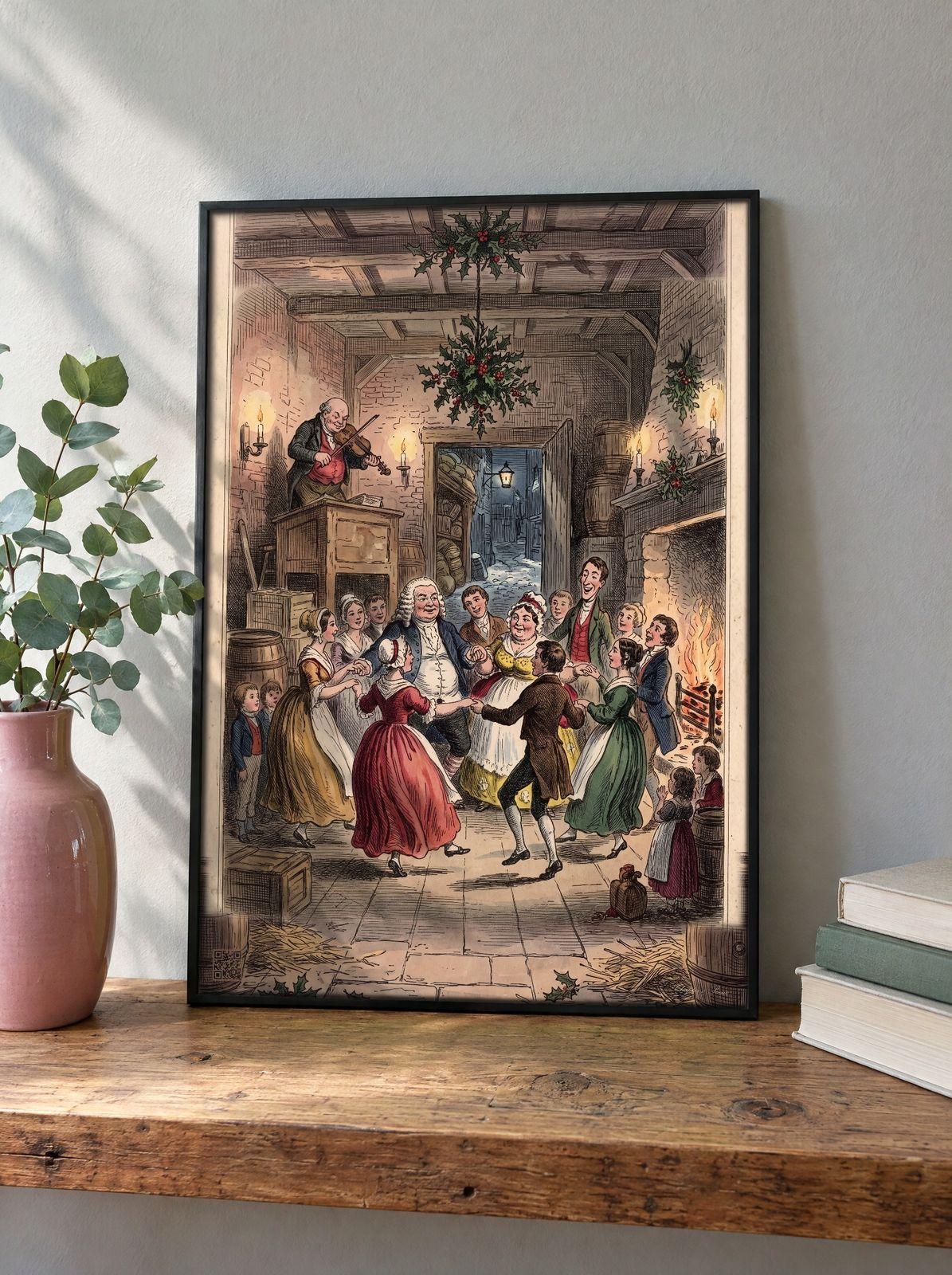
Fezziwig's Ball is the party in colour: the fiddler, the dancers and the lamps. It suits a dining room or a hallway at Christmas.
Read more: A Christmas Carol quotes.
Buying for a reader? See book lover gifts under £10, £25 and £50.
Not sure which print? Take the Christmas quiz.
Also on the journal: the story behind The Nutcracker and who was Mrs Beeton.
Questions
Questions, answered
Who is Mr Fezziwig in A Christmas Carol?
He is the kind merchant Scrooge worked for as a young man, who throws a Christmas Eve ball for everyone in the house.
What dance is at Fezziwig's ball?
"Sir Roger de Coverley", a country dance, which Fezziwig opens with his wife.
More from the journal
Keep reading
More guides and links
- More A Christmas Carol prints
- Where to buy second hand books online in the UK
- The most searched classic novels in the UK, 2026
- Classic Novels prints
- Quiz: which book character are you?
- Christmas gifts for book lovers
- More christmas posts
- More gift ideas for book lovers
- Christmas gifts for him
- Christmas gifts for her
- Christmas gifts for mum
- Christmas gifts for dad
- More from the journal