10 most atmospheric scenes in classic novels
The most atmospheric scenes in classic novels are the ones tied to a place and a light: a moonlit churchyard in Dracula, fog on Dartmoor in The Hound of the Baskervilles, wind on the moors in Wuthering Heights. Here are ten, with a note on the printmaking style that fits each.
Our prints from this guide.
Looking for a gift? Christmas gifts for him, her, dad and mum.
Atmosphere is what stays with you after the plot has faded. You may forget who married whom, but you remember the fog, the candle, the cold window. These ten feel like pictures before anyone has drawn them. Most of them sit in our classic novel prints.
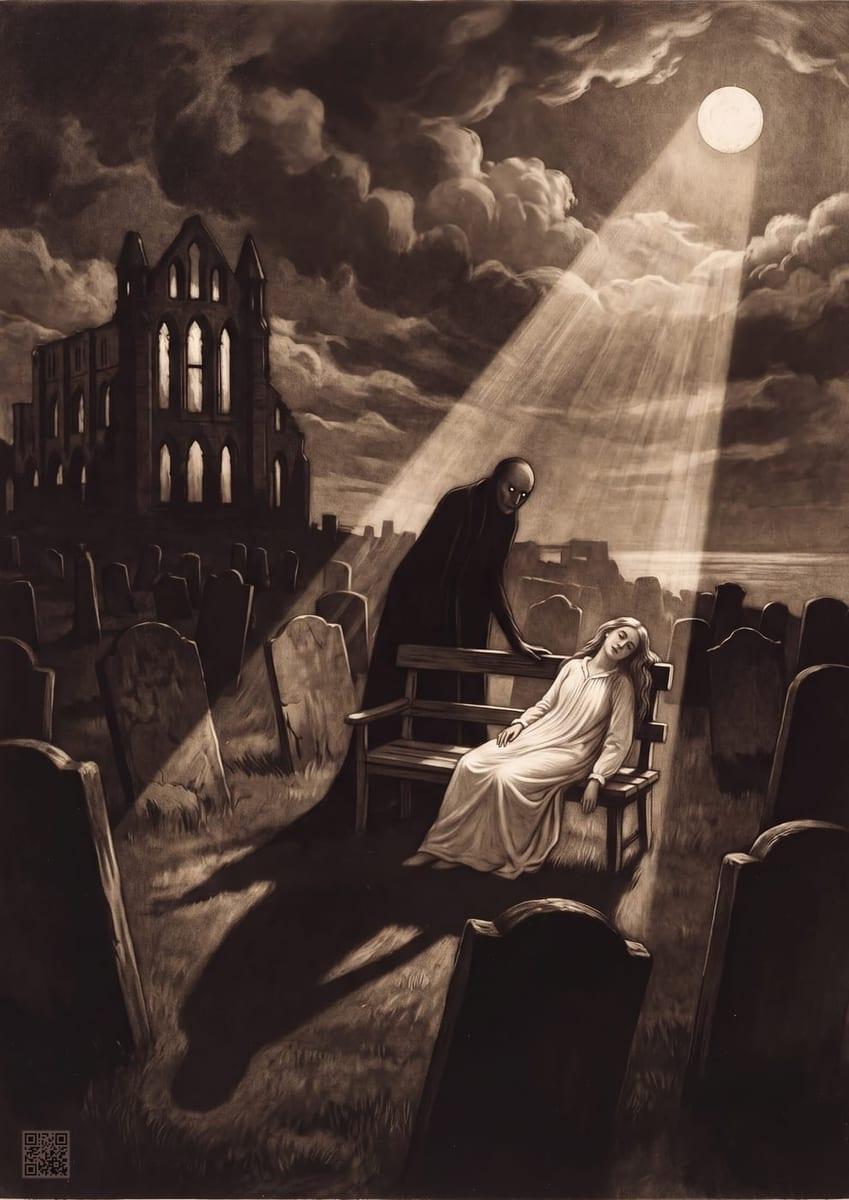
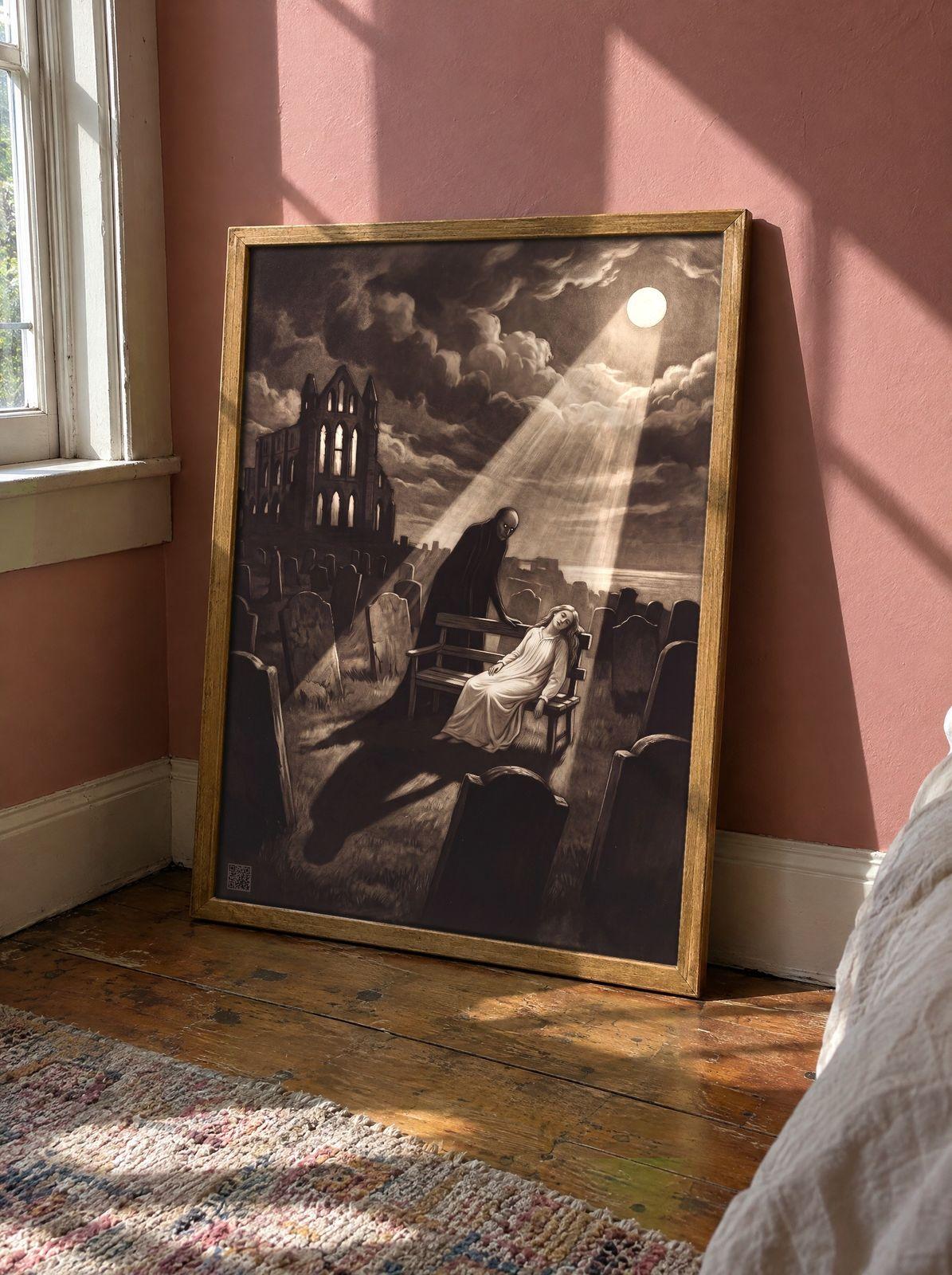
1. Dracula: Whitby churchyard by moonlight
In Mina's journal, she wakes to find Lucy's bed empty and runs up the long flight of steps to the East Cliff, where Lucy lies on their favourite seat in the moonlight with a dark shape bent over her. It is the moment the novel turns from unease to horror. A Victorian mezzotint, with every light scraped out of deep black, suits it perfectly, which is how we made our Dracula print. For the real places behind the chapter, read Dracula in Whitby. Read Dracula free on Project Gutenberg.
Buy these prints
2. The Hound of the Baskervilles: fog on the moor
Late in the book, Holmes and Watson wait among the rocks on Dartmoor while a thick white fog creeps towards them. Then the hound bursts out of the fog, glowing and enormous. We gave it the look of a late eighteenth-century colour print in pen and watercolour, with the fog laid in soft and grey. More on The Hound of the Baskervilles, and the legend behind it in Black Shuck and the Hound. Read The Hound of the Baskervilles free on Project Gutenberg.
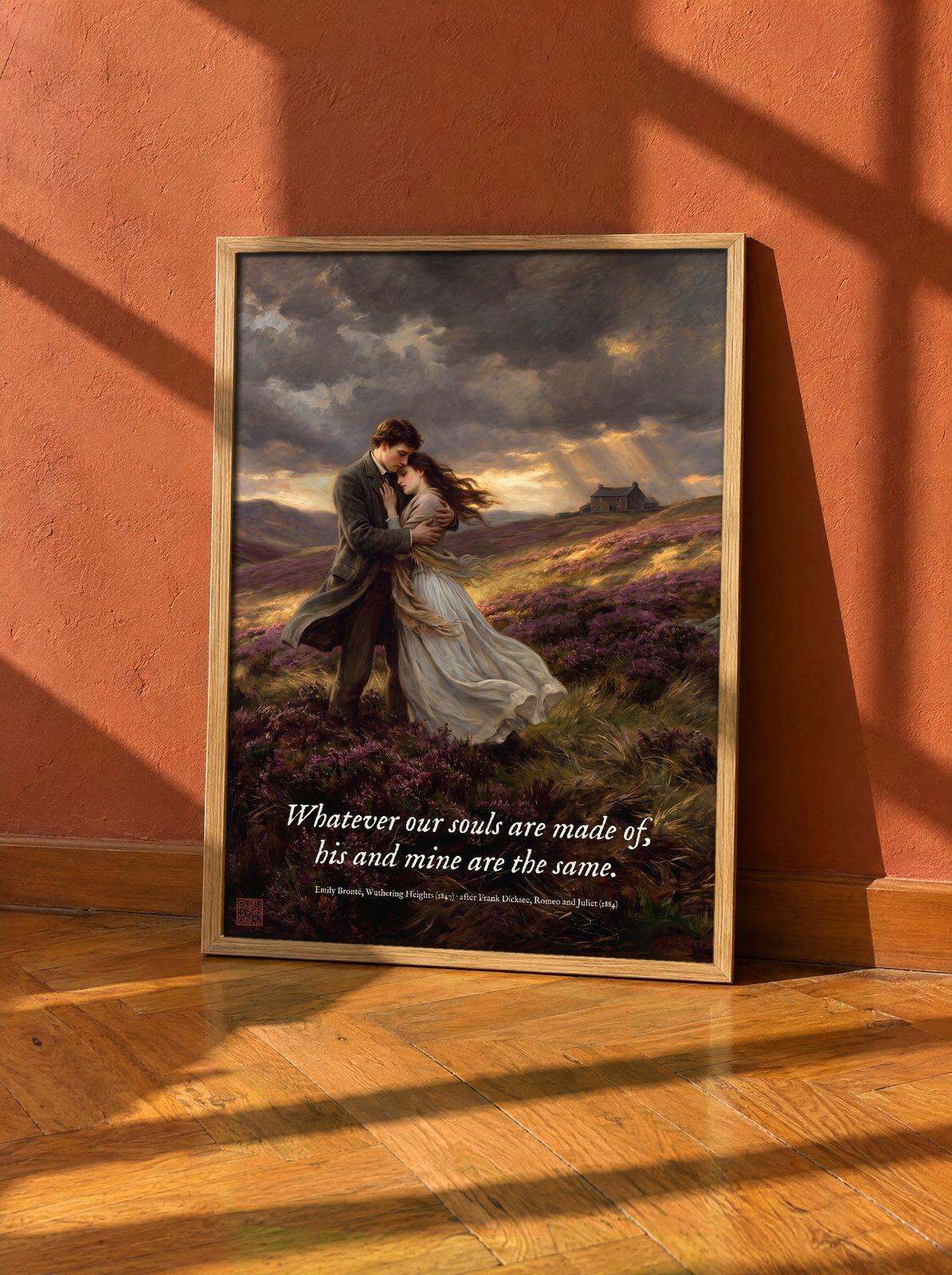
3. Wuthering Heights: wind on the heather
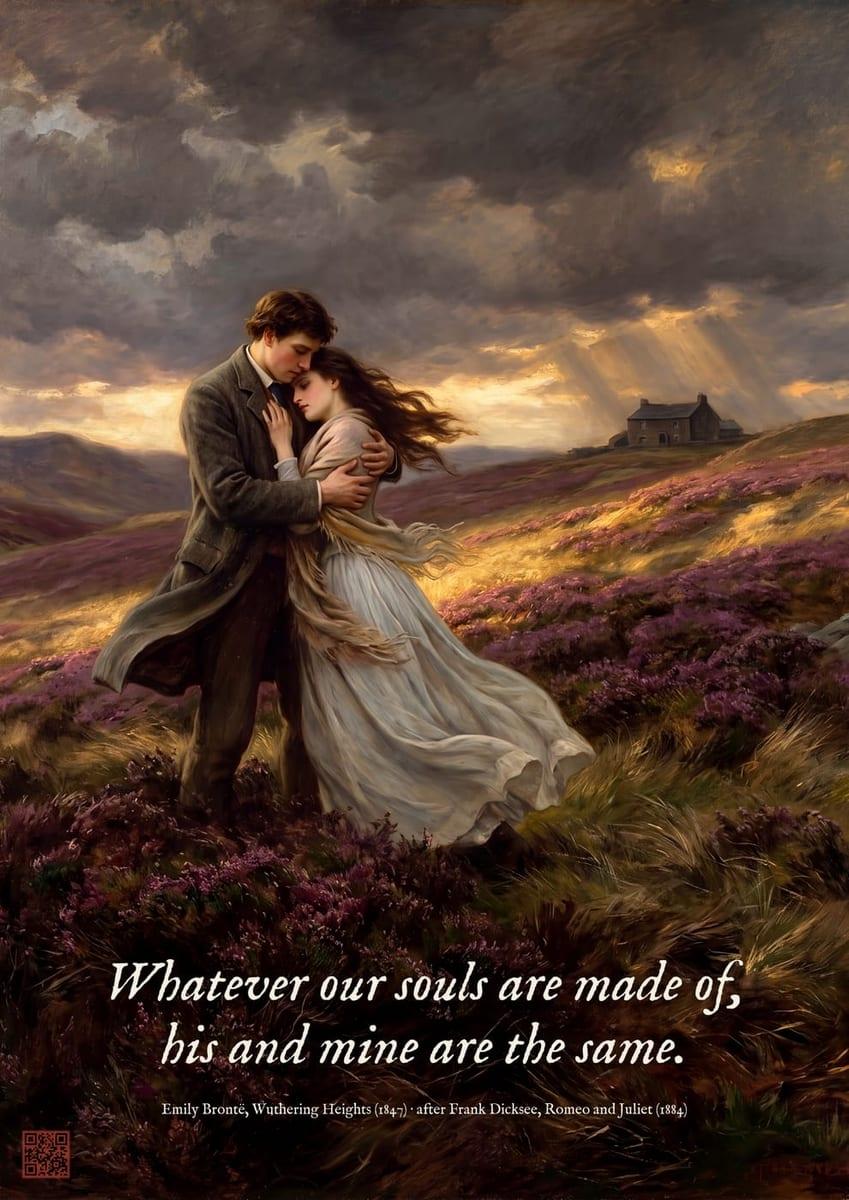
Emily Bronte's moors are never still. Early on, Lockwood is kept awake by a branch tapping at the window, breaks the glass, and feels a cold child's hand take hold of his own. Out on the heather, Cathy's famous line about her soul and Heathcliff's being made of the same stuff belongs to a stormy sky and a warm oil palette. Read Wuthering Heights free on Project Gutenberg.
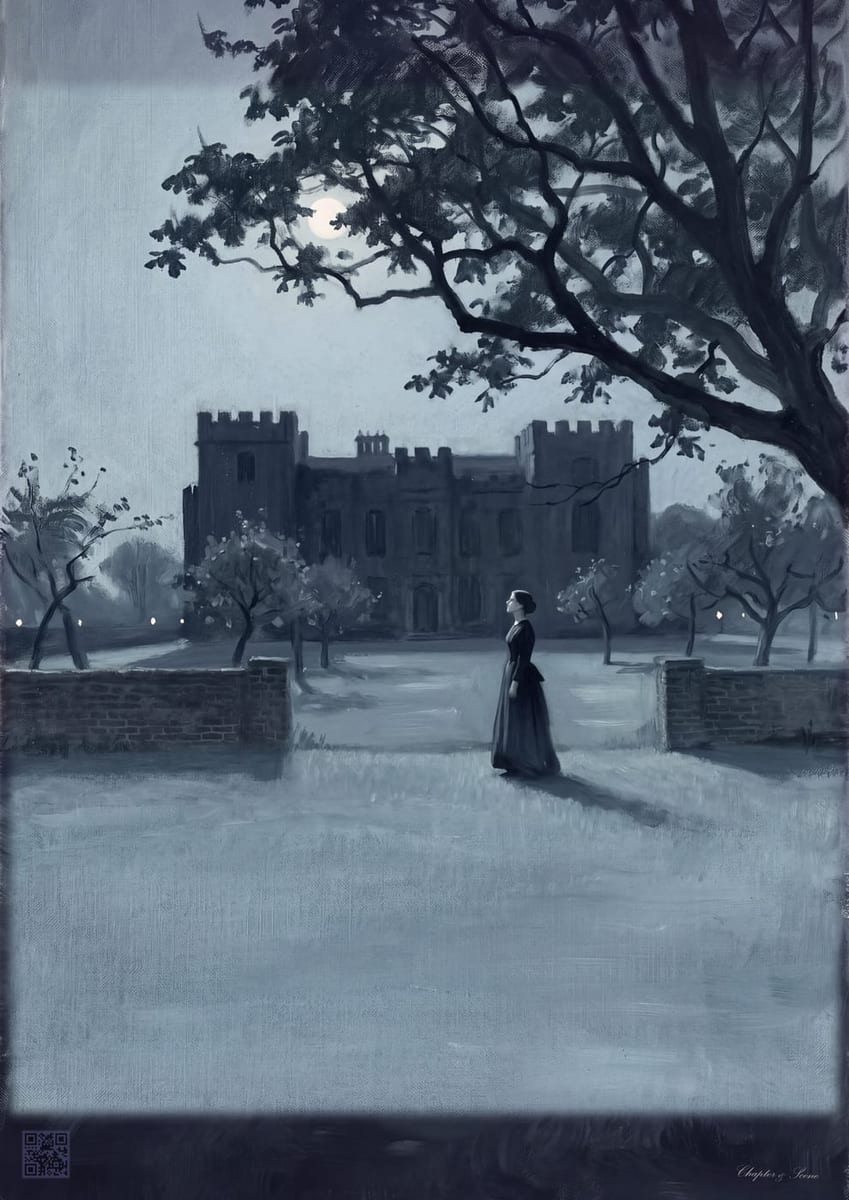
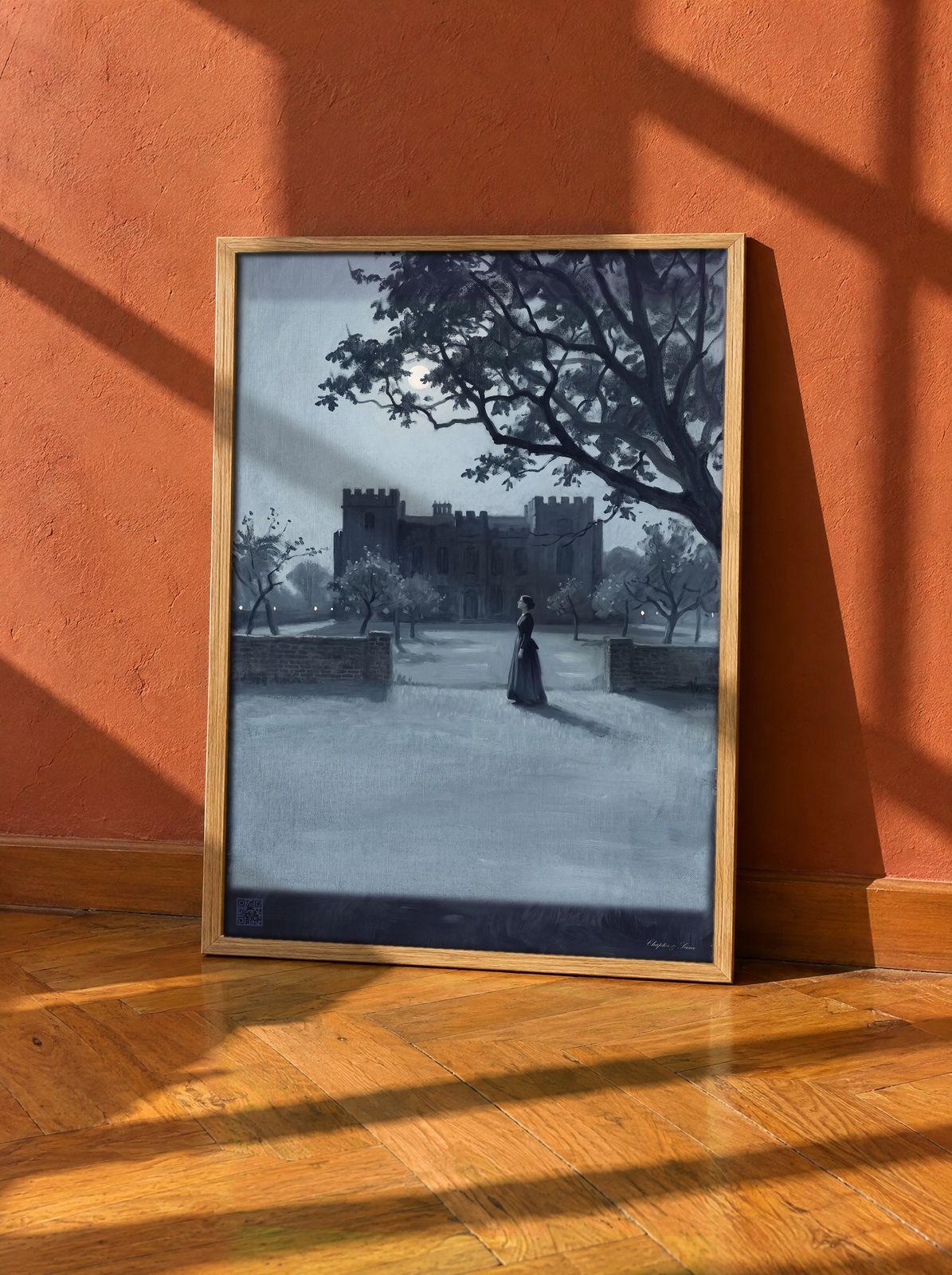
4. Jane Eyre: the orchard at Thornfield
On a midsummer evening Jane walks in the orchard at Thornfield, under the old horse-chestnut, and Rochester asks her to marry him. That same night a storm breaks and lightning splits the tree, which readers take as a warning. A misty blue nocturne holds the hush of the moment before it, as in I Am No Bird.
5. Great Expectations: Satis House
Young Pip is taken to Satis House, where Miss Havisham sits in her yellowed wedding dress among stopped clocks and a rotting wedding feast, the daylight shut out for years. It would suit a dark etching, all cross-hatching and candle glow, the kind of work in our engravings and etchings style.
6. Frankenstein: the Arctic ice
Mary Shelley frames her story with an explorer's ship trapped in the Arctic ice. At the close, Victor has died aboard, and the creature stands over his body before leaving across the ice and vanishing into the dark. A pale wood engraving, mostly white space with a few hard black lines, would catch that emptiness. It belongs with our gothic and horror prints.
7. Alice's Adventures in Wonderland: the mad tea party
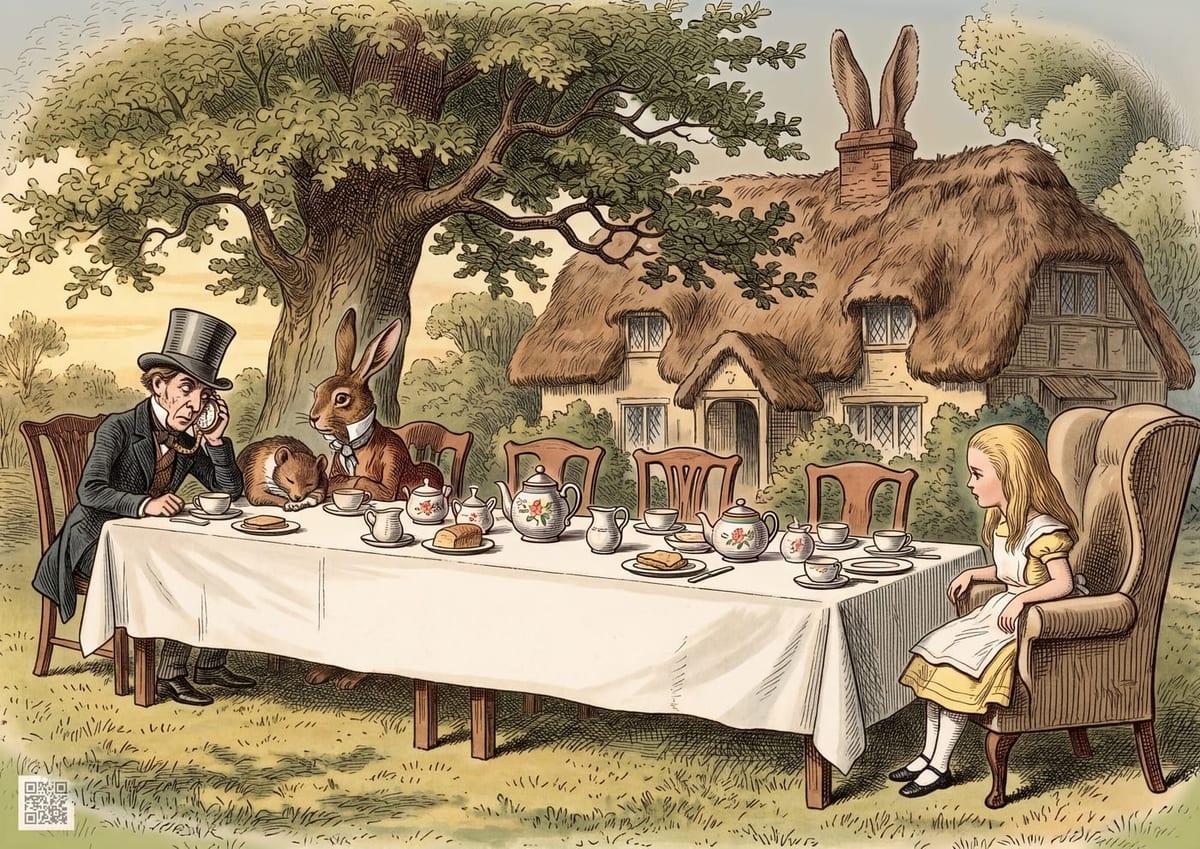
Not every atmosphere is dark. The tea party is all noise and nonsense: the Hatter, the March Hare and a sleeping Dormouse crowded at one end of a long table, where it is always six o'clock and so always time for tea. We drew it as an 1860s colour wood engraving, the way Alice's first readers knew her. See more on our Alice in Wonderland page.
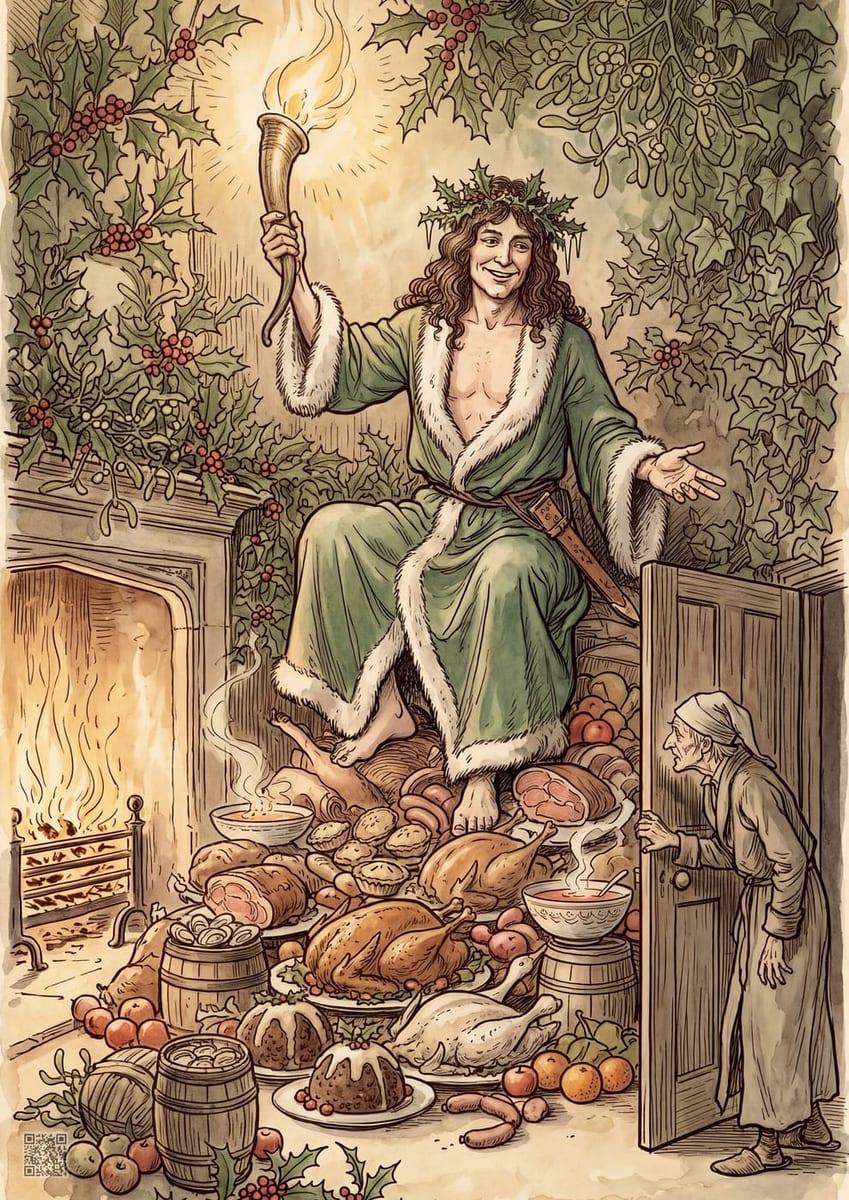
8. A Christmas Carol: the Ghost of Christmas Present
Scrooge's bare room is suddenly hung with holly and ivy, a fire roars, and food is heaped into a throne for a giant spirit in a green robe. It is one of the warmest scenes Dickens wrote. An Edwardian pen and watercolour suits it, like a plate from an old gift edition. The same stave takes Scrooge to the Cratchits' table, and there is more on our A Christmas Carol page.
9. Treasure Island: the map and the shore
Jim Hawkins finds the map in the old captain's sea chest, and from then on the island exists twice, once on paper and once as the hot, swampy shore he later slips onto alone. A sea chart in the manner of an old engraved map, with faded ink and a sandy coastline, is the natural fit.
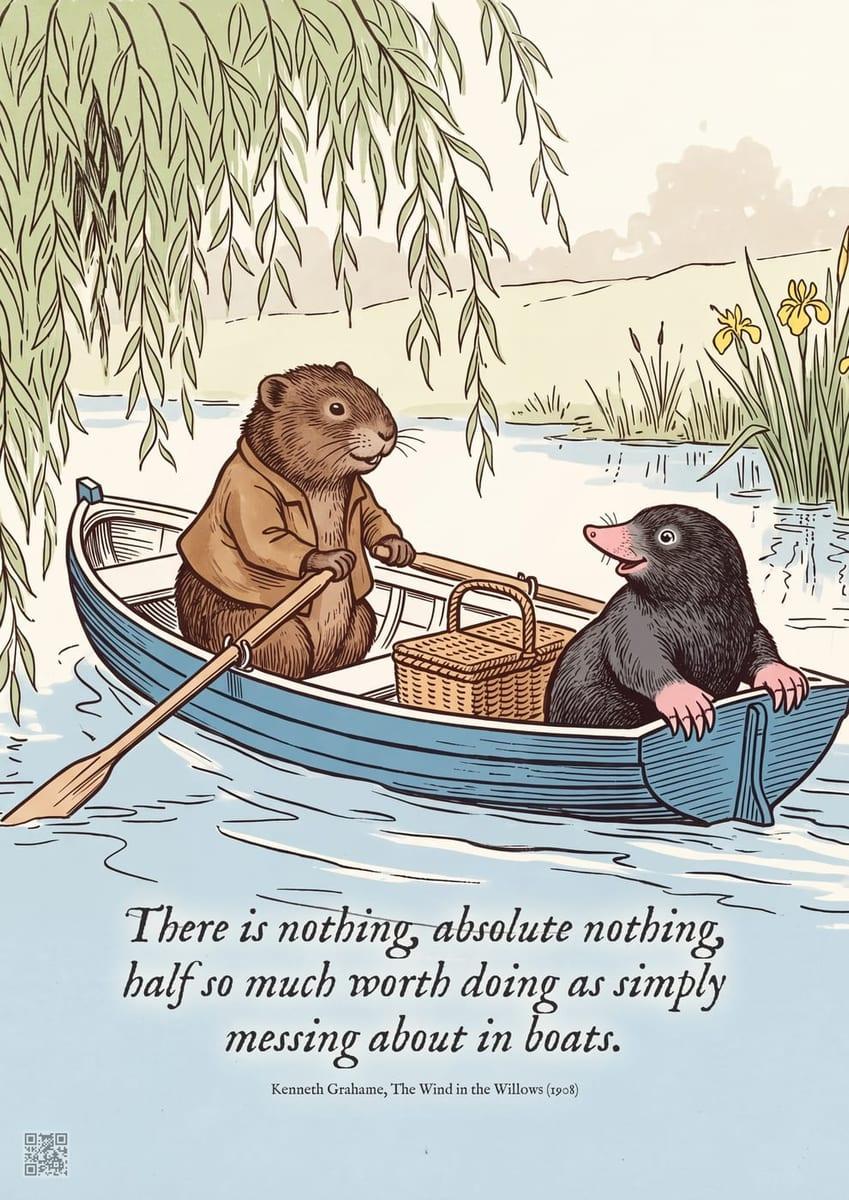
10. The Wind in the Willows: the river
Mole abandons his spring cleaning, finds the river for the first time and is rowed out by Ratty in his little boat. A Victorian colour wood engraving keeps it bright and calm, as in Messing About in Boats.
How to choose a scene as a gift
- Start with the book they love, then the scene they talk about, not just the title.
- Match the mood to the room: a mezzotint or etching for a study or a dark hallway, a bright wood engraving or watercolour for a kitchen or a child's room.
- Think about size: an A4 print at £14.99 suits a shelf or desk, and framed prints start from £46.99, ready to hang.
If you are not sure which style is which, printmaking styles explained covers the basics, and mezzotints and woodcuts gathers the darkest of them. For more ideas, try our gift finder or browse Christmas gifts for book lovers.
Related reading: Dracula in Whitby and printmaking styles explained.
Keep reading
Questions
- Which classic novel has the best atmosphere?
- Dracula and Wuthering Heights are the usual answers. One has the moonlit churchyard at Whitby, the other the wind and storms of the Yorkshire moors.
- What art style suits a gothic scene?
- Mezzotint and wood engraving. Both work from deep blacks and hard light, which suits candles, moonlight and fog.


